Palestine
Palestine
The land, its history, its cities and the culture its people carry with them: the background to the art in this gallery.
History
Palestine has been lived in continuously for more than ten thousand years. Jericho is counted among the oldest inhabited towns on earth, and the land has been part of many empires before the modern era.
- 691–692The Dome of the Rock is completed in Jerusalem under the Umayyad caliph Abd al-Malik.
- 1516–1917Four centuries of Ottoman rule.
- 1920–1948The British Mandate for Palestine.
- 1947The UN General Assembly passes Resolution 181, a plan to partition Palestine.
- 1948The Nakba (“catastrophe”): more than 700,000 Palestinians flee or are expelled from their homes, and hundreds of villages are depopulated or destroyed. Palestinians mark it every year on 15 May.
- 1964The Palestine Liberation Organization (PLO) is founded.
- 1967In the June war, Israel occupies the West Bank, including East Jerusalem, and the Gaza Strip.
- 1987The First Intifada (uprising) begins.
- 1988The Palestinian Declaration of Independence is read in Algiers; its text was written by the poet Mahmoud Darwish.
- 1993The Oslo Accords are signed; the Palestinian Authority is established the following year.
- 2000The Second Intifada begins.
- 2002–2004Israel begins building the separation wall in the West Bank; in 2004 the International Court of Justice finds its route contrary to international law.
- 2012The UN General Assembly accords Palestine the status of non-member observer state.
- Since 2023War in Gaza from October 2023 brings immense loss of life and destruction.

The flag
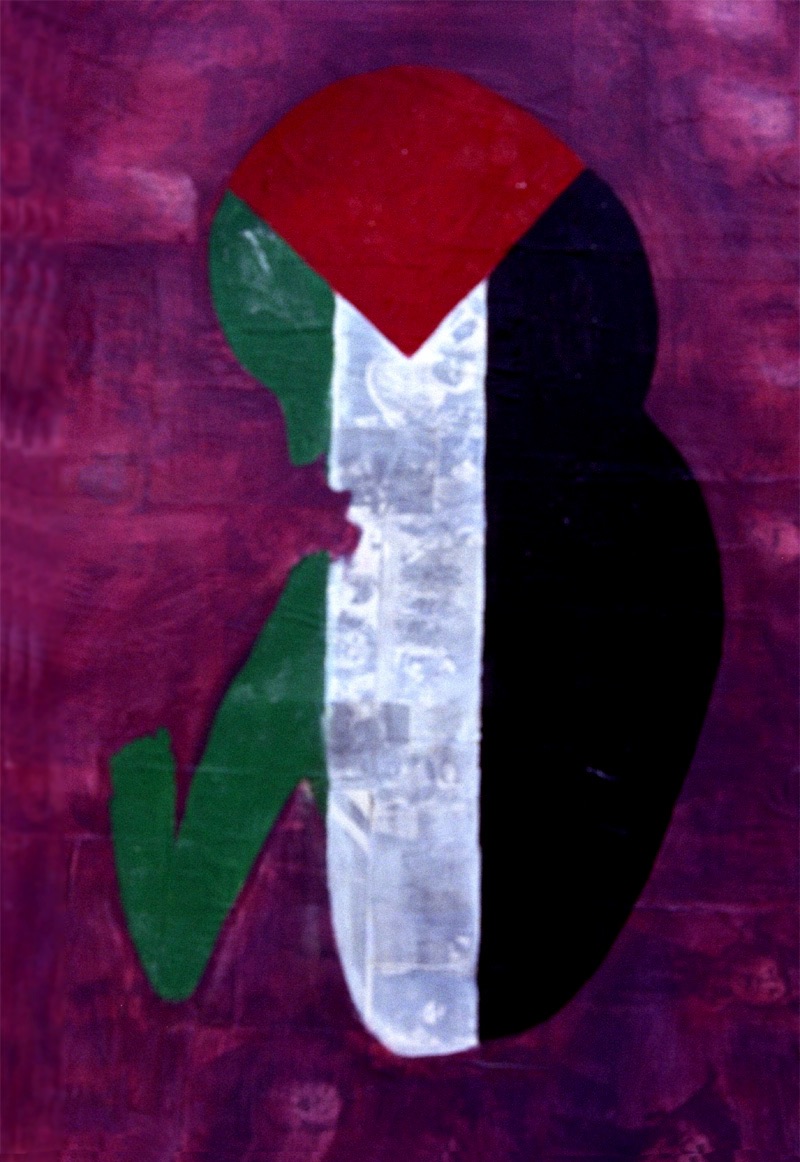
The Palestinian flag has three horizontal stripes — black, white and green — with a red triangle at the hoist. It is based on the flag of the Arab Revolt of 1916, and its colours are often linked to the Abbasid, Umayyad, Fatimid and Hashemite dynasties.
The PLO adopted it in 1964, and it became the flag of the State of Palestine in 1988. After 1967, when displaying it was banned in the occupied territories, the watermelon — red, green, white and black — became a quiet stand-in that is still used today.
Cities
Jerusalem · Al-Quds
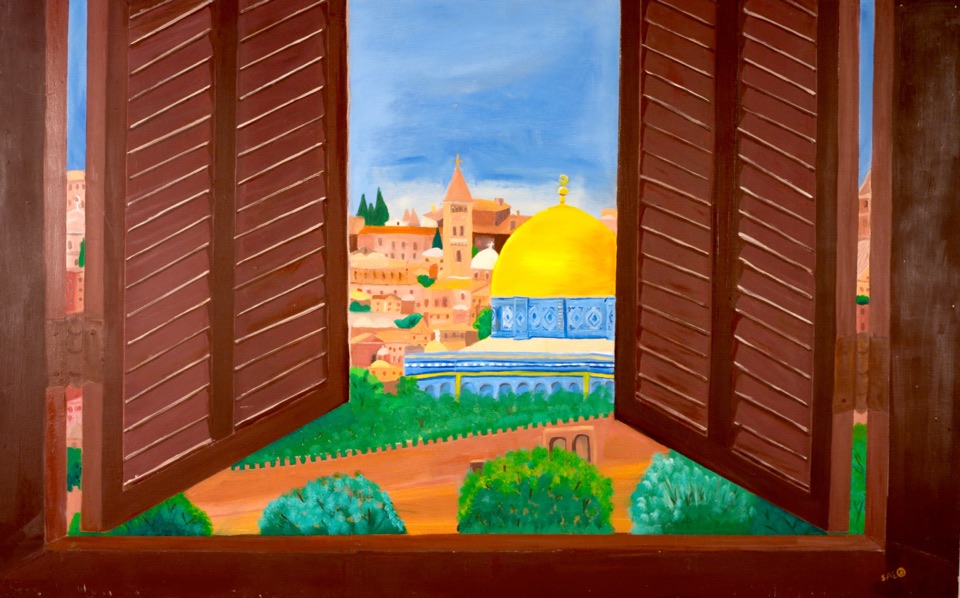
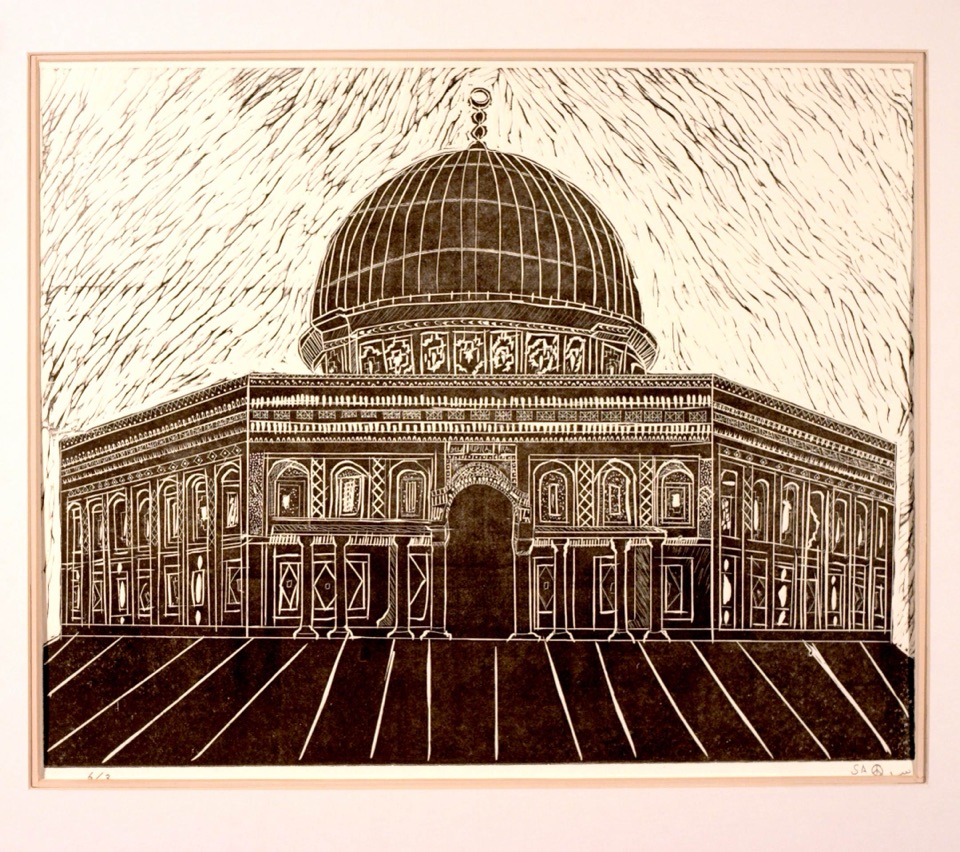
A holy city for Muslims, Christians and Jews. Its walled Old City holds the Dome of the Rock and Al-Aqsa Mosque on the Haram al-Sharif, and the Church of the Holy Sepulchre.
Bethlehem · Bayt Lahm
Birthplace of Jesus in Christian tradition. The Church of the Nativity became a UNESCO World Heritage Site in 2012. Known for its embroidery and olive-wood carving.
Hebron · Al-Khalil
Home of the Ibrahimi Mosque and an Old Town listed by UNESCO in 2017. Famous for hand-blown glass, ceramics and keffiyeh weaving.
Nablus
A city of old stone souks between two mountains, known for olive-oil soap and for knafeh.
Jericho · Ariha
One of the oldest continuously inhabited towns in the world. Its ancient mound, Tell es-Sultan, was listed by UNESCO in 2023.
Ramallah
A hill town that grew into a centre of Palestinian cultural and civic life, with galleries, theatres and music festivals.
Gaza
An ancient Mediterranean port city on old trade routes between Africa and Asia, with a long tradition of weaving, pottery and fishing.
Jaffa · Yafa
A historic port whose name travelled the world on its oranges, and a centre of Palestinian press and culture before 1948.
Haifa
A port city climbing the slopes of Mount Carmel above the bay.
Acre · Akka
A walled sea town whose Old City was listed by UNESCO in 2001.
Nazareth · Al-Nasira
The town of the Annunciation in Christian tradition and a home of Palestinian music, from Rim Banna to Le Trio Joubran.
Dress & tatreez
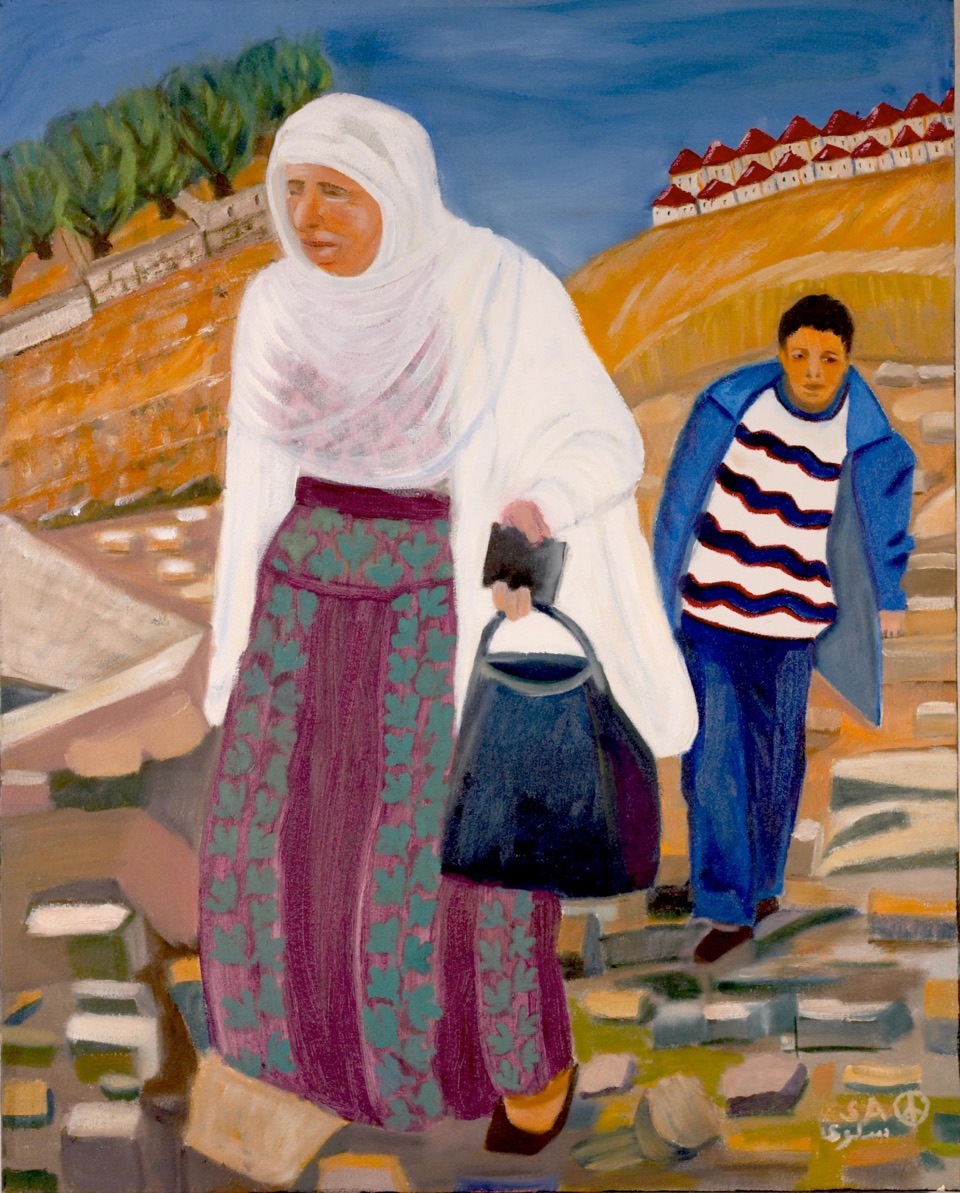
Tatreez is Palestinian cross-stitch embroidery, worked above all on the thobe, the long dress. Each region once had its own motifs and colours, so a dress could tell where its maker came from: the tall palm of Ramallah, the couched gold and silver thread of Bethlehem, the dense reds of the Hebron hills.
In 2021 UNESCO inscribed “the art of embroidery in Palestine” on its list of the Intangible Cultural Heritage of Humanity.
The keffiyeh, the black-and-white checked scarf, became a symbol of Palestinian identity in the 20th century. It is still woven in Hebron at the Hirbawi factory, founded in 1961.


Music & dance
Dabke is the line dance of weddings and celebrations: dancers link arms and stamp out the rhythm together. It is played on the mijwiz and arghul (double reed pipes), the shabbabeh flute, the oud and the tabla drum, with folk forms such as dal’ouna, ataaba and zajal.
Modern Palestinian music carries the same songs forward: Rim Banna of Nazareth (1966–2018) recorded old lullabies and folk songs; the oud brothers Le Trio Joubran come from Nazareth; and Mohammed Assaf, from Gaza, won Arab Idol in 2013. The poems of Mahmoud Darwish have been sung across the Arab world, most famously by the Lebanese composer Marcel Khalife.
Palestinian art
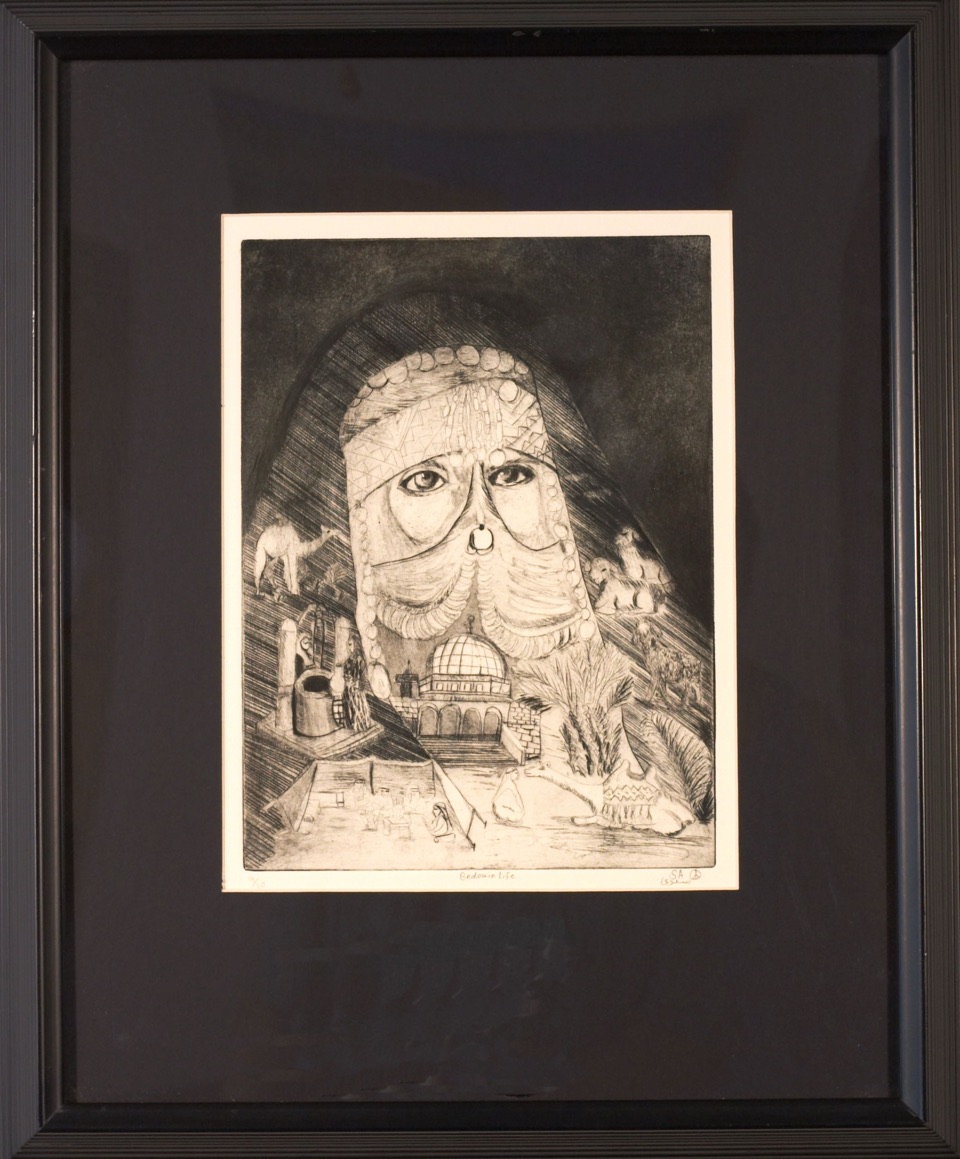
Palestinian visual art runs from the icon painters of 18th- and 19th-century Jerusalem to the artists who made the Nakba and exile their subject. Ismail Shammout (1930–2006), born in Lydda, and Tamam Al-Akhal, born in Jaffa in 1935, painted displacement and return. Sliman Mansour’s 1973 painting Camel of Hardships, an old porter carrying Jerusalem on his back, became one of the most reproduced images of the occupied territories.
In 1987 the New Visions group — Sliman Mansour, Nabil Anani, Tayseer Barakat and Vera Tamari among them — stopped using imported materials and worked instead with local mud, henna, leather and wood. Naji al-Ali’s cartoon child Handala, drawn from 1969 with his back to the viewer, remains a symbol across the region. Today artists such as Mona Hatoum, Emily Jacir and Larissa Sansour show worldwide, and the Palestinian Museum opened in Birzeit in 2016.
Land, olive & table
The olive tree is at the centre of Palestinian life. Families gather every autumn for the harvest, some from trees that have stood for centuries, and the oil, soap and wood of the olive run through the culture. The terraced olive groves and vineyards of Battir were listed by UNESCO in 2014.
The table follows the land: za’atar and olive oil with bread, musakhan of sumac chicken and onions on taboon bread, maqluba turned upside down at the table, and knafeh from Nablus. Hospitality — the coffee offered to every guest — is a value in its own right.

